
 Slovenčina

-
 News
- Separate parameter
Cystatin C
+5 €Processing of results
you only pay once per order Collection point
 From 6 years old
Partner collection point
 from 18 years old
Partner collection point
from 18 years old
Collection point
From 6 years old
Collection point
From 6 years old
Collection point
From 6 years old
Partner collection point
from 18 years old
Partner collection point
from 18 years old
Partner collection point
from 18 years old
Collection point
From 6 years old
Collection point
From 6 years old
Partner collection point
from 18 years old
Collection point
From 6 years old
Collection point
From 6 years old
Partner collection point
from 18 years old
Partner collection point
from 18 years old
Partner collection point
from 18 years old
Partner collection point
from 18 years old
Partner collection point
from 18 years old
Partner collection point
from 18 years old
Partner collection point
from 18 years old
Partner collection point
Partner collection point
from 18 years old
Partner collection point
from 18 years old
Collection point
From 6 years old
Collection point
From 6 years old
Partner collection point
from 18 years old
Partner collection point
from 18 years old
Partner collection point
from 18 years old
Partner collection point
From 6 years old
Collection point
From 6 years old
Partner collection point
from 18 years old
Collection point
From 6 years old
Collection point
From 6 years old
Partner collection point
from 18 years old
Partner collection point
from 18 years old
Collection point
From 6 years old
Partner collection point
from 18 years old
Partner collection point
From 6 years old
Partner collection point
from 18 years old
Partner collection point
From 6 years old
Partner collection point
from 18 years old
Partner collection point
from 18 years old
Cystatin C is a protein that can be used in laboratory diagnostics to estimate the glomerular filtration rate (eGFR)—an indicator of kidney function.
Find out why our customers love us













Cystatin C

Our customers consistently rate us an average of 5 from 5 stars. For our professionalism, efficiency, and empathetic approach.

You can receive your results for selected tests on the same day as the sample collection, all other results will be available online within a few business days.

With online booking for a specific time, you minimize waiting and complete the entire sample collection quickly and comfortably.

We’re close to you at 45 collection points across Slovakia - high-quality laboratory test are within reach.

Our laboratories perform more than 40.1 million tests annually for physicians, healthcare facilities, and self-paying patients.
About this test
Cystatin C is a protein that can be used in laboratory diagnostics to estimate the glomerular filtration rate (eGFR)—an indicator of kidney function.
Glomerular filtration rate (GFR) is a generally accepted key indicator of kidney function. Direct measurement of GFR through the excretion of exogenous substances is difficult to perform in routine clinical practice; therefore, estimated GFR (eGFR) is used in practice. Most calculation equations are based on serum creatinine levels and other data, such as the patient’s age, sex, race, and body weight. Estimating GFR using serum creatinine concentration provides a basic assessment of renal filtration capacity in clinical practice.
Compared with creatinine, the calculation of eGFR using serum cystatin C is less influenced by factors other than renal function (e.g., muscle mass, race, or sex). Serum cystatin C concentration is not significantly affected by age or height.
According to several studies, serum cystatin C concentrations increase even with a mild decline in GFR, before serum creatinine concentrations rise. Cystatin C is therefore considered a more sensitive indicator of GFR decline, and the calculation of eGFR using cystatin C is regarded as an early marker of impaired kidney function.
Calculating eGFR using cystatin C may be particularly appropriate:
- in cases of reduced muscle mass (insufficient muscle mass relative to age, sex, and race), e.g., due to prolonged immobilization, muscular dystrophy, or malnutrition,
- to confirm chronic kidney disease suggested by an eGFR estimate calculated from serum creatinine, especially when markers of kidney damage are not present,
- in cases where serum creatinine concentration is significantly altered (e.g., during pregnancy, in cases of generalized edema, in young children—particularly those under 2 years of age—or during rapid changes in clinical status).
Calculation of eGFR based on serum cystatin C concentration cannot be used in the following situations:
- during treatment with glucocorticoids (which increase serum cystatin C concentration),
- in patients with uncompensated hyperthyroidism (increased cystatin C concentration) or hypothyroidism (decreased cystatin C concentration),
- in patients with cancer (increased cystatin C concentration).
The eGF value has greater diagnostic value than serum cystatin C concentration alone. Therefore, serum cystatin C results and the eGFcys value should always be reported together.
eGFcys should not be used in isolation to assess glomerular filtration rate. Serum creatinine should be used primarily to estimate GFR.
Included tests/parameters
Notice
Laboratory test results must always be interpreted in the context of the patient’s medical history, clinical condition, and the results of other laboratory and diagnostic tests. Deviations from normal values are not sufficient on their own to establish a diagnosis, and values within the normal range do not always mean that a disease is absent. It is advisable to consult a doctor about the results.
Collection instructions
Please read these instructions carefully well in advance of the collection.
Bring a valid ID (ID card or passport) to verify your identity.
Testing procedure
How takes place Cystatin C
Your journey to better health starts here — simple, clear, and tailored for you.

Choose the right test for you
Choose from the range of laboratory tests we have prepared for you.

Book online in just a few clicks
Select a convenient time at one of our 43 collection points and pay securely by card. The whole process takes just minutes.

Visit your chosen collection point
Arrive at your selected location at the scheduled time. The sample collection is fast and hassle-free.
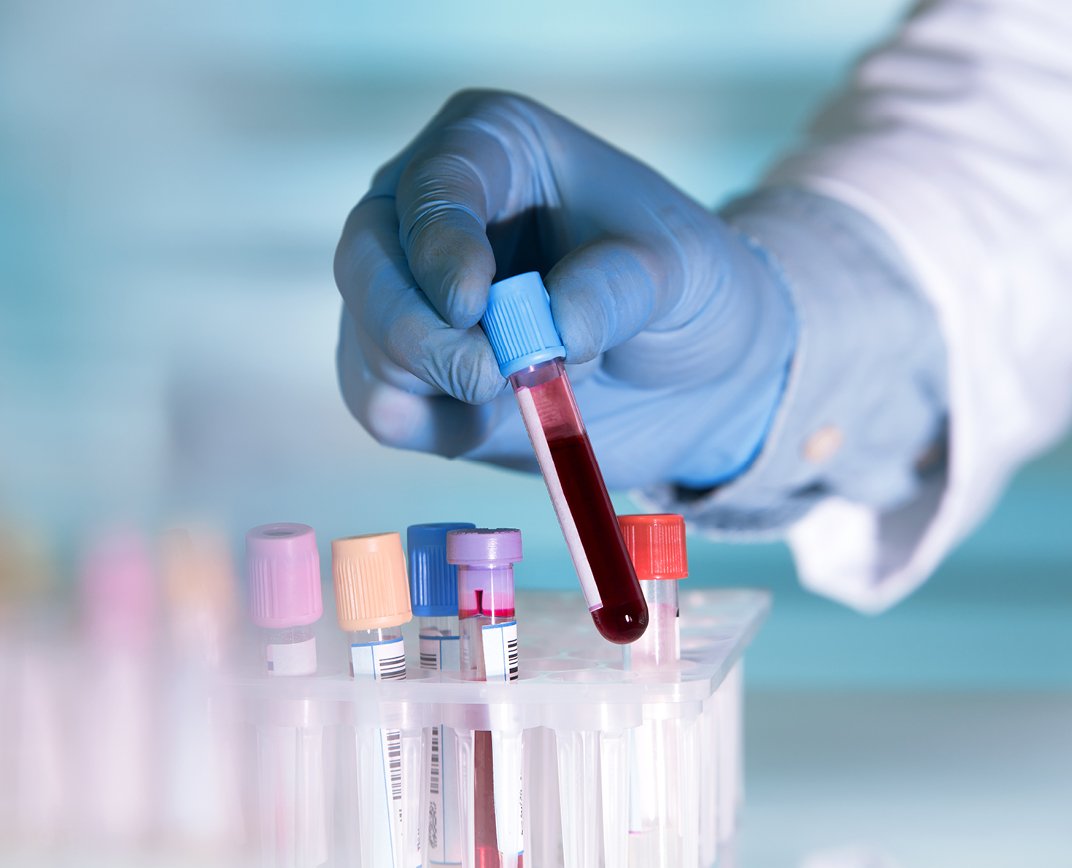
We’ll collect: blood.

Expert laboratory analysis
Your sample is analyzed in top-tier, accredited labs using state-of-the-art technology. Results are available within 2 business days.

Get your results online
Access your results safely and securely in your personal account. Clearly presented and easy to understand.
Customer reviews
5 stars out of 4 ratings
4 customer reviews
 Verified customer
Verified customer
Verified customer

Build your own package
Use your time efficiently. You’ll have your package assembled in no time.
You can easily choose your test in a user-friendly configurator – everything in one place, without unnecessary clicks. An effective solution for your health, tailored exactly to your needs.
Sources
- Odporúčania pre diagnostiku chronického ochorenia obličiek (odhad glomerulárnej filtrácie a vyšetrenie proteinúrie), ČSKB a ČNS ČLS JEP, 2021, https://www.cskb.cz/wp-content/uploads/2021/05/Doporuceni-k-diagnostice-chronickeho-onemocneni-ledvin-2021.pdf, navštívené 10. 6. 2025
- Brodská H., Kohout P. Laboratórne vyšetrenia v klinickej praxi, strana 55.
- Zima T. a kol. Laboratórna diagnostika. Tretie, doplnené a prepracované vydanie. strana 150. Galen 2013, 1 189 strán. 978-80-7492-074-5 (pdf)