
 Slovenčina


-
 News
- Separate parameter
- Possibility of interpretation
sd-LDL cholesterol
+5 €Processing of results
you only pay once per order Collection point
 From 6 years old
Partner collection point
 from 18 years old
Partner collection point
from 18 years old
Collection point
From 6 years old
Collection point
From 6 years old
Collection point
From 6 years old
Partner collection point
from 18 years old
Partner collection point
from 18 years old
Partner collection point
from 18 years old
Collection point
From 6 years old
Collection point
From 6 years old
Partner collection point
from 18 years old
Collection point
From 6 years old
Collection point
From 6 years old
Partner collection point
from 18 years old
Partner collection point
from 18 years old
Partner collection point
from 18 years old
Partner collection point
from 18 years old
Partner collection point
from 18 years old
Partner collection point
from 18 years old
Partner collection point
from 18 years old
Partner collection point
Partner collection point
from 18 years old
Partner collection point
from 18 years old
Collection point
From 6 years old
Collection point
From 6 years old
Partner collection point
from 18 years old
Partner collection point
from 18 years old
Partner collection point
from 18 years old
Partner collection point
From 6 years old
Collection point
From 6 years old
Partner collection point
from 18 years old
Collection point
From 6 years old
Collection point
From 6 years old
Partner collection point
from 18 years old
Partner collection point
from 18 years old
Collection point
From 6 years old
Partner collection point
from 18 years old
Partner collection point
From 6 years old
Partner collection point
from 18 years old
Partner collection point
From 6 years old
Partner collection point
from 18 years old
Partner collection point
from 18 years old
Small dense LDL particles (sd-LDL) are a subclass of LDL; they are smaller, denser, and associated with a higher risk of cardiovascular disease than large LDL particles.
Find out why our customers love us













sd-LDL cholesterol

Our customers consistently rate us an average of 5 from 5 stars. For our professionalism, efficiency, and empathetic approach.

You can receive your results for selected tests on the same day as the sample collection, all other results will be available online within a few business days.

With online booking for a specific time, you minimize waiting and complete the entire sample collection quickly and comfortably.

We’re close to you at 45 collection points across Slovakia - high-quality laboratory test are within reach.

Our laboratories perform more than 40.1 million tests annually for physicians, healthcare facilities, and self-paying patients.
About this test
Small dense LDL particles (sd-LDL) are a subclass of LDL; they are smaller, denser, and associated with a higher risk of cardiovascular disease than large LDL particles.
Low-density lipoprotein (LDL) particles transport most of the cholesterol from the liver to the cells and are associated with an increased risk of atherosclerotic cardiovascular disease (ASCVD). They are divided into subclasses based on their size and density, and these subclasses have different effects on the risk of cardiovascular disease. Small, dense LDL particles remain in the bloodstream longer, penetrate the vascular wall more easily, are more susceptible to oxidation, and therefore have a greater potential for the development of atherosclerosis than other LDL subclasses.
Patients with obesity, type 2 diabetes, insulin resistance, and metabolic syndrome more frequently have high levels of circulating sd-LDL while maintaining relatively normal levels of total LDL-c. Cardiovascular risk in these patients may be underestimated when only total LDL-c is measured. In these cases in particular, measuring sd-LDL cholesterol is a better indicator of cardiovascular risk than total LDL cholesterol (LDL-c). Serum sd-LDL testing has high sensitivity for detecting an increased risk of ASCVD in patients with metabolic dysfunction or residual risk, even when LDL-c is optimally controlled.
A single test may not fully reflect long-term risk; long-term monitoring is more appropriate for this purpose.
Collection instructions
Please read these instructions carefully well in advance of the collection.
Please bring a valid ID (ID card or passport) to verify your identity.
Testing procedure
How takes place sd-LDL cholesterol
Your journey to better health starts here — simple, clear, and tailored for you.

Choose the right test for you
Explore our wide selection of lab tests tailored to your symptoms, lifestyle, or specific parameters. Find exactly what you need — quickly and easily.

Book online in just a few clicks
Select a convenient time at one of our 43 collection points and pay securely by card. The whole process takes just minutes.

Visit your chosen collection point
Arrive at your selected location at the scheduled time. The sample collection is fast and hassle-free.
We’ll collect: blood.

Expert laboratory analysis
Your sample is analyzed in top-tier, accredited labs using state-of-the-art technology. Results are available within 2 business days.

Get your results online
Access your results safely and securely in your personal account. Clearly presented and easy to understand.
FAQ
Can I contact a helpline if I have a question?
You can address your questions to [email protected] or to the sk.unilabs.online social media page. We will answer your questions on business days from 8:30 a.m. to 4:00 p.m.
Our info line is receiving more and more praise. Here is one of them:
"Good day. Everything was fine. I also communicated with the ladies from the call center, and they were very kind, helpful, and accommodating. 👍 The complete results arrived very quickly — practically within 24 hours of the sampling. 👍 Thank you." Vladimír
What is the preparation before blood collection?
You should arrive for your blood collection in the morning and on an empty stomach. It is also recommended to drink water before the blood collection. For more detailed information on how to prepare for a blood collection, please refer to the individual product pages in the Instructions Before Collection section and on the page the Instructions Before Collection.
How can I pay for the collection?
The payment is always made online via Unilabs Online. After entering your details, you will be redirected to the payment gateway, where you can confirm the payment with just a few clicks, and within a few minutes, you can proceed to your examination. You can use Apple Pay, Google Pay, or online card payment.
When will I know the results of the laboratory tests?
We will notify you immediately after the results are available in your account by email and possibly by text message, if you have a mobile phone number connected to your account.
Ms. Ivana says:
“The results arrived earlier, and the overall blood draw process was quick, so I’m satisfied. Online booking is great.”
In what form will I receive the results from sk.unilabs.online?
The results will be sent to your private sk.unilabs.online account in PDF version as soon as they are available. You will be informed about the availability of the result both by email and text message.
Customer reviews
5 stars out of 5 ratings
5 customer reviews
 Verified customer
Verified customer
Verified customer

Build your own package
Use your time efficiently. You’ll have your package assembled in no time.
You can easily choose your test in a user-friendly configurator – everything in one place, without unnecessary clicks. An effective solution for your health, tailored exactly to your needs.
Add similar tests to your cart
Information from the blood? You can never have enough
Apolipoprotein A1 (apoA1) is the most important and most abundant protein (apoprotein) in HDL particles. HDL particles, or high-density lipoproteins, are one of the main classes of lipoproteins…
Apolipoprotein B (apoB) is the main protein component of atherogenic (atherosclerosis-causing) lipoprotein particles. It is a key indicator of cardiovascular risk because it directly reflects the…

Triglycerides and cholesterol levels, HDL and LDL are essential markers of fat metabolism. They depend among other on the diet received, physical activity and the functioning of the metabolism as a…
You take the sd-LDL cholesterol as part of the following tests

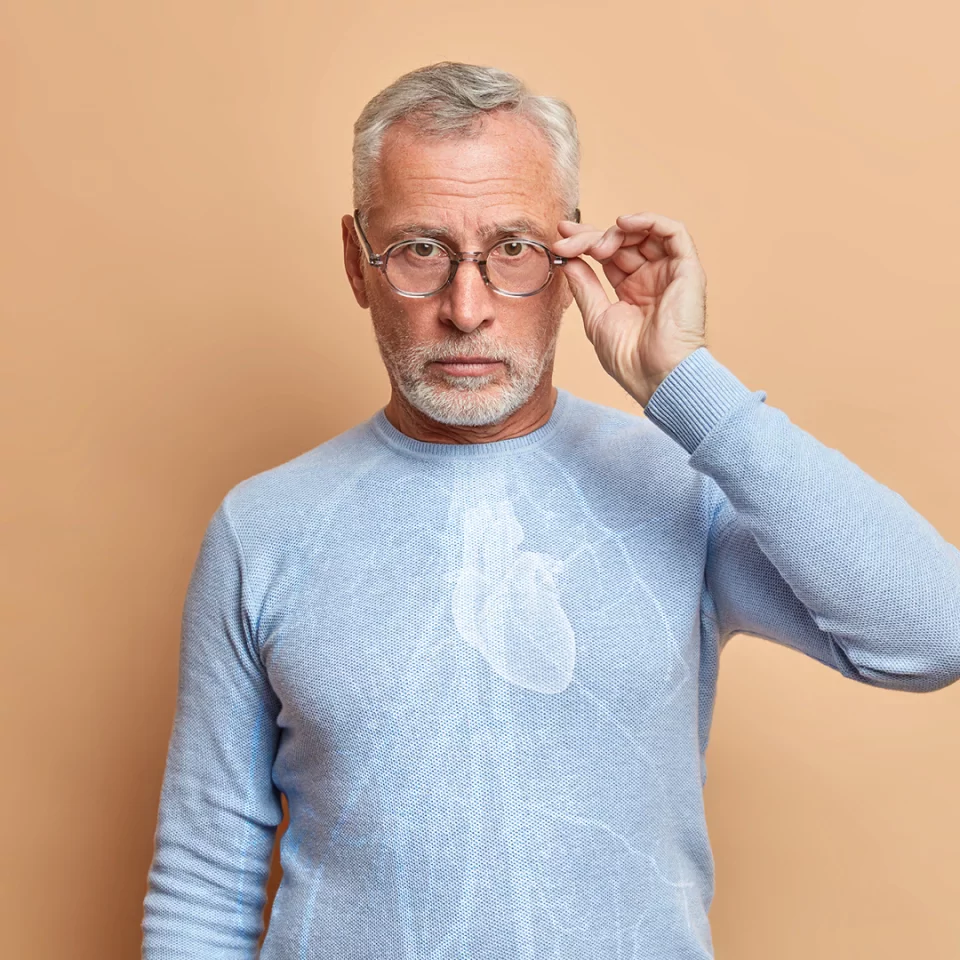
This testing package is intended for individuals seeking a thorough evaluation of their cardiovascular health. The Cardiovascular Test BASIC provides a comprehensive laboratory view of the…
 The most popular
This testing package is intended for individuals seeking a thorough evaluation of their cardiovascular health. The Cardiovascular Test EXPERT provides a comprehensive laboratory view of the…
Sources
- Bekbossynova M.et al. Molecular Medicine REPORTS 32: 328, 202
- German CA, Shapiro MD. Assessing Atherosclerotic Cardiovascular Disease Risk with Advanced Lipid Testing: State of the Science. Eur Cardiol. 2020 Jul 15;15:e56. doi: 10.15420/ecr.2019.18. PMID: 32742310; PMCID: PMC7387892
- Low-density lipoproteins cause atherosclerotic cardiovascular disease: pathophysiological, genetic, and therapeutic insights: a consensus statement from the European Atherosclerosis Society Consensus Panel, European Heart Journal, Volume 41, Issue 24, 21 June 2020, Pages 2313–2330, https://doi.org/10.1093/eurheartj/ehz962