
 Slovenčina


- Separate parameter
- Possibility of interpretation


LDL cholesterol
+5 €Processing of results
you only pay once per orderLDL - low-density lipoproteins, are particles that transport the bulk of cholesterol from the liver to the peripheral tissues. They are formed in the liver as VLDL (very low-density lipoproteins), which change into IDL (intermediate-density lipoproteins) and LDL after the release of triacylglycerols. On the surface is the apolipoprotein apo B-100. The main function of LDL is to transport cholesterol into cells, which use it in the construction of tissue cell membranes and in the synthesis of steroid hormones and vitamin D.
I’m ordering:
Find out why our customers love us













LDL cholesterol


Our customers consistently rate us an average of 5 from 5 stars. For our professionalism, efficiency, and empathetic approach.

You can receive your results for selected tests on the same day as the sample collection, all other results will be available online within a few business days.

With online booking for a specific time, you minimize waiting and complete the entire sample collection quickly and comfortably.

We’re close to you at 41 collection points across Slovakia - high-quality laboratory test are within reach.

Our laboratories perform more than 40.1 million tests annually for physicians, healthcare facilities, and self-paying patients.
About this test
LDL - low-density lipoproteins, are particles that transport the bulk of cholesterol from the liver to the peripheral tissues. They are formed in the liver as VLDL (very low-density lipoproteins), which change into IDL (intermediate-density lipoproteins) and LDL after the release of triacylglycerols. On the surface is the apolipoprotein apo B-100. The main function of LDL is to transport cholesterol into cells, which use it in the construction of tissue cell membranes and in the synthesis of steroid hormones and vitamin D.
Benefits of LDL cholesterol testing:
- results within 2 working days
- results are discreetly communicated in your profile
- only one parameter is measured
We do not provide LDL cholesterol interpretation through our partner uLékaře.cz. If you want to have this parameter interpreted, get it in the Lipid Metabolism, Women´s preventive care 30+, 40+, 50+, 60+ and Men´s preventive care 30+, 40+, 50+ and 60+ packages.
What´s measured
The increased supply of LDL and their prolonged biological half-life are one of the reasons for the dysfunction of the endothelium of blood vessels, where oxidation of LDL particles occurs. Oxidized LDL particles are taken up by macrophages and form foam cells, which accumulate and form an atherosclerotic plaque, which in turn stimulates the immune system to an inflammatory response. The more atherogenic small dense LDL (sd-LDL, LDL subfractions 3-7) readily penetrate the endothelium into the vascular wall, have lower resistance to oxidation, bind less to LDL receptors, and persist longer in the plasma.
The test is recommended for screening and risk assessment of cardiovascular diseases; in overweight individuals; in diabetics; for monitoring treatment of lipid metabolism disorders; it is the main target parameter in the treatment of hypercholesterolemia; in high blood pressure, heart diseases.
If you need to consult the results of the parameters, we recommend you to contact your general practitioner or internist.
Values of test LDL cholesterol
High values
Elevated values are associated with a risk of the development and progression of atherosclerosis.
Notice
Laboratory test results must always be interpreted in the context of the patient’s medical history, clinical condition, and the results of other laboratory and diagnostic tests. Deviations from normal values are not sufficient on their own to establish a diagnosis, and values within the normal range do not always mean that a disease is absent. It is advisable to consult a doctor about the results.
Collection instructions
Please read these instructions carefully well in advance of the collection.
Bring a valid ID (ID card or passport) to verify your identity.
Testing procedure
How takes place LDL cholesterol
Your journey to better health starts here — simple, clear, and tailored for you.

Choose the right test for you
Explore our wide selection of lab tests tailored to your symptoms, lifestyle, or specific parameters. Find exactly what you need — quickly and easily.

Book online in just a few clicks
Select a convenient time at one of our 40 collection points and pay securely by card. The whole process takes just minutes.

Visit your chosen collection point
Arrive at your selected location at the scheduled time. The sample collection is fast and hassle-free.
We’ll collect: blood.

Expert laboratory analysis
Your sample is analyzed in top-tier, accredited labs using state-of-the-art technology. Results are available within 2 business days.

Get your results online
Access your results safely and securely in your personal account. Clearly presented and easy to understand.
What interests you about the LDL cholesterol test?
How to reduce LDL cholesterol?
If your LDL cholesterol level is higher than the upper limit of the normal range, contact your doctor. The doctor will determine the procedure for achieving the target value based on the specific value and other laboratory clinical data and examinations. To reduce LDL cholesterol, it is recommended to limit the intake of saturated fatty acids (animal fats, e.g. butter, lard), increase the intake of unsaturated fatty acids (sunflower, rapeseed, safflower oil, flaxseed, corn, olives). It is recommended to prefer vegetables, fruits, cereals, fish and poultry in the diet. It is also advisable to quit smoking.[9]
What should be the LDL cholesterol value?
The European Society of Cardiology (ESC) sets the value of LDL cholesterol and other parameters in the blood according to the individual risk of cardiovascular disease. In people with low risk, the LDL cholesterol value should be less than 3 mmol/l and the triglyceride level less than 1.7 mmol/l. There is also a parameter called total cholesterol; reference values depend on age, the upper limit is around 5 mmol/l.[10]
What is a dangerous cholesterol level?
For LDL cholesterol, the European Society of Cardiology (ESC) recommends a value of less than 3 mmol/l for people with low cardiovascular risk. According to the ESC, the triglyceride value should be less than 1.7 mmol/l for people with low cardiovascular risk. Do not underestimate elevated cholesterol levels, as they signal possible blockage of blood vessels and the possible development of cardiovascular diseases.[11]
EN: What is the cut-off value for cholesterol?
The cut-off value for LDL cholesterol is less than 3 mmol/l and for triglycerides less than 1.7 mmol/l in people with low cardiovascular risk according to the European Society of Cardiology. Reference values for total cholesterol depend on age, the upper limit is approximately 5 mmol/l. Get your cholesterol tested and monitor your optimal values.[13]
Related articles
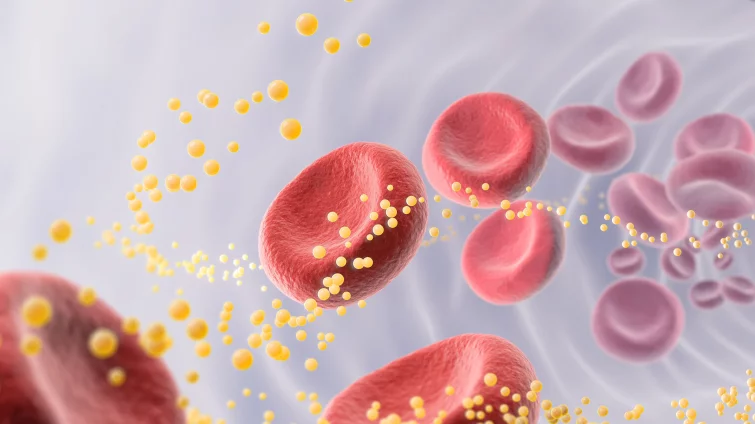
HDL cholesterol vs. LDL Cholesterol: What's the Difference Between Them and What Do They Actually Do?
The two types of cholesterol behave like Jekyll and Hyde. While (good cholesterol) HDL is involved in the transport of cholesterol to the liver, where it is broken down, (bad cholesterol) LDL increases cholesterol…

Facts about LDL cholesterol: It's called "bad cholesterol", it can bother people in their 30s and it builds up in the walls of blood vessels. What is the norm for LDL and is it possible to lower it?
Cholesterol has earned itself the label of something bad and health-threatening. But the truth is that it is a vital compound that the human body cannot do without. According to the density of the particles, there are 2…
Customer reviews
4.97 stars out of 71 ratings
71 customer reviews
 Verified customer
Verified customer
Verified customer
Verified customer
Verified customer
Verified customer
Verified customer

Build your own package
Use your time efficiently. You’ll have your package assembled in no time.
You can easily choose your test in a user-friendly configurator – everything in one place, without unnecessary clicks. An effective solution for your health, tailored exactly to your needs.
Add similar tests to your cart
Information from the blood? You can never have enough

Triglycerides and cholesterol levels, HDL and LDL are essential markers of fat metabolism. They depend among other on the diet received, physical activity and the functioning of the metabolism as a…
Creatinine is a protein (protein) that is produced by all cells of the human body. Creatinine excretion takes place exclusively by the kidneys and therefore allows the examination of the level of…

 The most popular
As part of the “Men's preventive care 40+” laboratory testing package, we will monitor the values of 21 parameters. For example, we will measure the blood level of prostate markers (PSA and fPSA),…

As part of the “Women's preventive care 40+” laboratory testing package, we will monitor the values of 25 parameters. Compared to the “Women's preventive care 30+” variant, this package additionally…
You take the LDL cholesterol as part of the following tests
As part of the examination, we will check your cholesterol, LDL and HDL cholesterol, triacylglycerols and CRPhs. The levels of these parameters are important indicators of how our body processes…

As part of the “Men's preventive care 30+” laboratory testing package, we will determine the values of 16 parameters. As a result, you will get an overview of your vitamin D blood level or your lipid…
As part of the “Men's preventive care 40+” laboratory testing package, we will monitor the values of 21 parameters. For example, we will measure the blood level of prostate markers (PSA and fPSA),…

In the “Men's preventive care 50+” laboratory testing package, 28 parameters are monitored. This variant is intended for men over the age of 50. Compared to the 40+ age variant, this package includes…

Get insights in your in your metabolish and heart health by measuring key factors. Lipids, such as cholesterol and triglycerides, are small fat-like substances in your body that reveal important…

As part of the “Men's preventive care 60+” laboratory testing package, we will examine 29 parameters. You will obtain an overview of important markers, such as the level of PSA and fPSA prostate…

As part of the “Women's preventive care 30+” laboratory testing package, we will examine the laboratory values of 18 parameters. Compared to the “Women's preventive care 20+” variant, “Women's…
As part of the “Women's preventive care 40+” laboratory testing package, we will monitor the values of 25 parameters. Compared to the “Women's preventive care 30+” variant, this package additionally…

As part of the “Women's preventive care 50+” laboratory testing package, we will examine the values of 31 laboratory parameters. Compared to the “Women's preventive care 40+” variant, hepatic…

As part of the “Women's preventive care 60+” laboratory testing package, we will examine the values of 28 laboratory parameters. For example, we will examine the levels of ALT, creatinine, uric acid,…

This testing package is intended for individuals seeking a thorough evaluation of their cardiovascular health. The Cardiovascular Test BASIC provides a comprehensive laboratory view of the…
This testing package is intended for individuals seeking a thorough evaluation of their cardiovascular health. The Cardiovascular Test EXPERT provides a comprehensive laboratory view of the…

Healthy skin, hair, and nails boost a woman’s confidence and well-being. Moreover, the skin is one of the best indicators of overall health. A decline in the quality of skin, hair, and nails may…
Healthy skin, hair, and nails boost a woman’s confidence and well-being. Moreover, the skin is one of the best indicators of overall health. A decline in the quality of skin, hair, and nails may…

As part of the EXPERT test package, we will examine your blood and urine, focusing on parameters that are the most sensitive to changes after switching to veganism/vegetarianism. Checking your health…

 News
News
Regular exercise offers numerous health benefits, but it also places greater demands on our bodies. This Fitness WOMAN laboratory test package is designed for all women who want to start exercising…

Regular exercise offers numerous health benefits, but it also places greater demands on the body. The Fitness MEN laboratory test package is designed for all men who want to start exercising or who…

As part of the BASIC laboratory test package, we measure 16 parameters that may be related to being overweight. We focus on cholesterol, creatinine, a complete blood count, and the liver markers ALP,…

The PLUS option expands the BASIC test package to include measurements of high-sensitivity C-reactive protein (hsCRP), uric acid, triacylglycerides, and thyroid-stimulating hormone (TSH). The package…

The EXPERT option is the most comprehensive version of the “Overweight and Obesity” laboratory test package. In addition to all the parameters we test in the PLUS option, the EXPERT option includes…

The decision to start a family is one of the most important steps in life. The “Preparing for Pregnancy” laboratory test package will give you a comprehensive overview of your health and help you…

The Weight Loss laboratory test package is designed for anyone who has decided to tackle excess weight or obesity and lose weight.
Sources
[1]Ďurovcová E. a kol. Klinická biochémia, Vybrané kapitoly. Osveta, Martin 2020, 300 strán, ISBN 978-80-8063-489-6
[2]François Mach et al. ESC Scientific Document Group. (2019). ESC/EAS Guidelines for the management of dyslipidaemias: lipid modification to reduce cardiovascular risk: The Task Force for the management of dyslipidaemias of the European Society of Cardiology (ESC) and European Atherosclerosis Society (EAS), European Heart Journal, Volume 41, Issue 1, 111–188. Online.
[9]François Mach et al. ESC Scientific Document Group. (2019). ESC/EAS Guidelines for the management of dyslipidaemias: lipid modification to reduce cardiovascular risk: The Task Force for the management of dyslipidaemias of the European Society of Cardiology (ESC) and European Atherosclerosis Society (EAS), European Heart Journal, Volume 41, Issue 1, 111–188. Dostupné online na: https://doi.org/10.1093/eurheartj/ehz455. [cit. 14-11-2024].
[10]François Mach et al. ESC Scientific Document Group. (2019). ESC/EAS Guidelines for the management of dyslipidaemias: lipid modification to reduce cardiovascular risk: The Task Force for the management of dyslipidaemias of the European Society of Cardiology (ESC) and European Atherosclerosis Society (EAS), European Heart Journal, Volume 41, Issue 1, 111–188. Dostupné online na: https://doi.org/10.1093/eurheartj/ehz455. [cit. 14-11-2024].
[11]François Mach et al. ESC Scientific Document Group. (2019). ESC/EAS Guidelines for the management of dyslipidaemias: lipid modification to reduce cardiovascular risk: The Task Force for the management of dyslipidaemias of the European Society of Cardiology (ESC) and European Atherosclerosis Society (EAS), European Heart Journal, Volume 41, Issue 1, 111–188. Dostupné online na: https://doi.org/10.1093/eurheartj/ehz455. [cit. 14-11-2024].
[13]François Mach et al. ESC Scientific Document Group. (2019). ESC/EAS Guidelines for the management of dyslipidaemias: lipid modification to reduce cardiovascular risk: The Task Force for the management of dyslipidaemias of the European Society of Cardiology (ESC) and European Atherosclerosis Society (EAS), European Heart Journal, Volume 41, Issue 1, 111–188. Dostupné online na: https://doi.org/10.1093/eurheartj/ehz455. [cit. 14-11-2024].